The 1980s began with the continued emphasis on equal employment opportunity. In addition, the organization continued their advocacy for voter registration and hosting annual events such as the Freedom Fund Dinner and Black History Month celebrations.1 The late 1980s was a moment of reorganization for the local NAACP chapter. In 1988, the national chapter of the NAACP came to Wayne County to help with the reorganization the local chapter by appointing new officers and helping the new officers create goals for the community, such as helping the children and getting the community more united through events.2 In 1989, the chapter was a part of one of the most noted events in Wooster history, when Rosa Parks came to the city.3
- Barbara D. Secrest, “Resident Enjoyed Program Put On By NAACP”, Daily Record (Wooster, Ohio), February 27, 1989, “Community Record”, Daily Record (Wooster, Ohio), February 13, 1989, “Community Record”, Daily Record (Wooster, Ohio), January 31, 1989
- 2. Dennis Monbarren, “Local NAACP Looking to Rebuild Support After Reorganization” Daily Record (Wooster, Ohio), June 4, 1988
- 3. E.E. Johnson, “Local NAACP Honors Mother of The Civil Rights Movement”, Daily Record (Wooster, Ohio), October 30, 1989
Key Events of the 1980s

Focus on Job Opportunities 1980
MLK Day 1980
Voter Registration 1980

MLK Scholarship 1987
Black History Month Program 1989
Rosa Parks Visit 1989
Focus on Job Opportunities 1980
In 1980, the local NAACP, alongside broad members from other chapters of the NAACP, called for a meeting to address the city’s lack of Equal Opportunity Officers, and its failure to recruit Black people for jobs.Specifically, the meeting was called by three broader members from various NAACP chapters, including Samuel Belcher, James Harris, and Mary Luster. Harris questioned the mayor’s ideas to fix these issues. He also offered his, and the other officers, ideas such as adding more Black recruiters to the college. The mayor responded with job descriptions and plans that would take place in the next month, hopefully resolving the issues.1
- Bee Colins, “NAACP Spokesmen Talk With Mayor”, Daily Record (Wooster, Ohio), January 22, 1980
MLK Day 1980
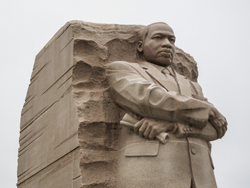
In 1980, the Wayne County Joint Vocational School Board decided to close the facility of remembrance of Martin Luther King Jr. However, Black students were allowed to take the day off. The Wooster-Orrville NAACP expressed their disappointment in the board’s decision stating that Martin Luther King Jr. deserved better. They continued on to talk about the importance of standing up for equal rights, citing Rosa Parks and Martin Luther King Jr. as examples of changes coming with protest. The NAACP finished by talking about the discrimination that still occurred in hotels and schools and asking the board to reconsider their decision.1
- James Harris, “Dr. King Deserved Better Than He Got”, Daily Record (Wooster, Ohio), January 31, 1980
Voter Registration 1980
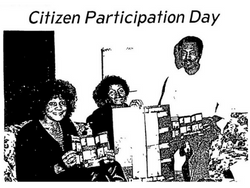
In 1980, the Wooster-Orrville NAACP was a participant in the Wayne County Community Action Commission Citizen Participation Day. The organization sponsored the event to help get minorities registered to vote in local and national elections. Outside of voter registration, there were a few speakers that came to help with the event. The Community Action Commission and the NAACP both had the goals of helping make citizens aware of their rights and how their government works.1
- “Citizen Participation Day”, Daily Record (Wooster, Ohio), September 18, 1980
MLK Scholarship 1987
In 1987, August Sims of Orrville was the first recipient of the Wooster-Orrville NAACP Martin Luther King Jr. Scholarship. The winner was announced during a Martin Luther King Jr. program that took place at St. Luke United Methodist Church in Orrville. In the future, the organization planned to extend the award to two winners and continue to choose students from the Wooster and Orrville area who belong to the organization.1
- “Sims Wins Local King Scholarship”, Daily Record (Wooster, Ohio), February 18, 1987
Black History Month Program 1989
For Black History Month in February of 1989, the Wooster-Orrville NAACP put on a weekly series of lectures that were open to the public. The series included several guest speakers who facilitated conversations around a variety of topics connected to Black History. Terry Kershaw, a Professor of Sociology at the College of Wooster, Judge Shirley Strickland Saffold, Cleveland Municipal Court judge, and a panel of teachers were all invited to serve as speakers during the series.1
- Barbara D. Secrest, “Resident Enjoyed Program Put On By NAACP”, Daily Record (Wooster, Ohio), February 27, 1989, “Community Record”, Daily Record (Wooster, Ohio), February 13, 1989, “Community Record”, Daily Record (Wooster, Ohio), January 31, 1989
Rosa Parks Visit 1989
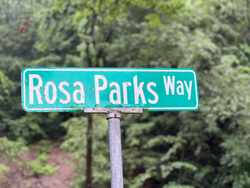
Most years, the Wooster-Orrville NAACP puts on a Freedom Fund Banquet, in which they host a keynote speaker. In 1989, Rosa Parks came to town for this very reason.1 Having an iconic person in the Civil Rights Movement come to Wayne County meant a lot to many residents of the community with a record number of people attending the banquet and garnering lots of media attention. Additionally, she was presented with keys to the city in both Wooster and Orrville.2 Parks’ presence left such a lasting impact that a committee formed to rename a street in Wooster in honor of her.3
- E. E. Johnson, “Mother of Civil Rights Movement Will Speak at Local NAACP Event,” Daily Record (Wooster, OH), May 11, 1989, 1.
- E. E. Johnson, “Local NAACP Honors Mother of Civil Rights Movement,” Daily Record (Wooster, OH), October 30, 1989, 1.
- “Park to Rosa Parks?,” Daily Record (Wooster, OH), December 19, 2001.